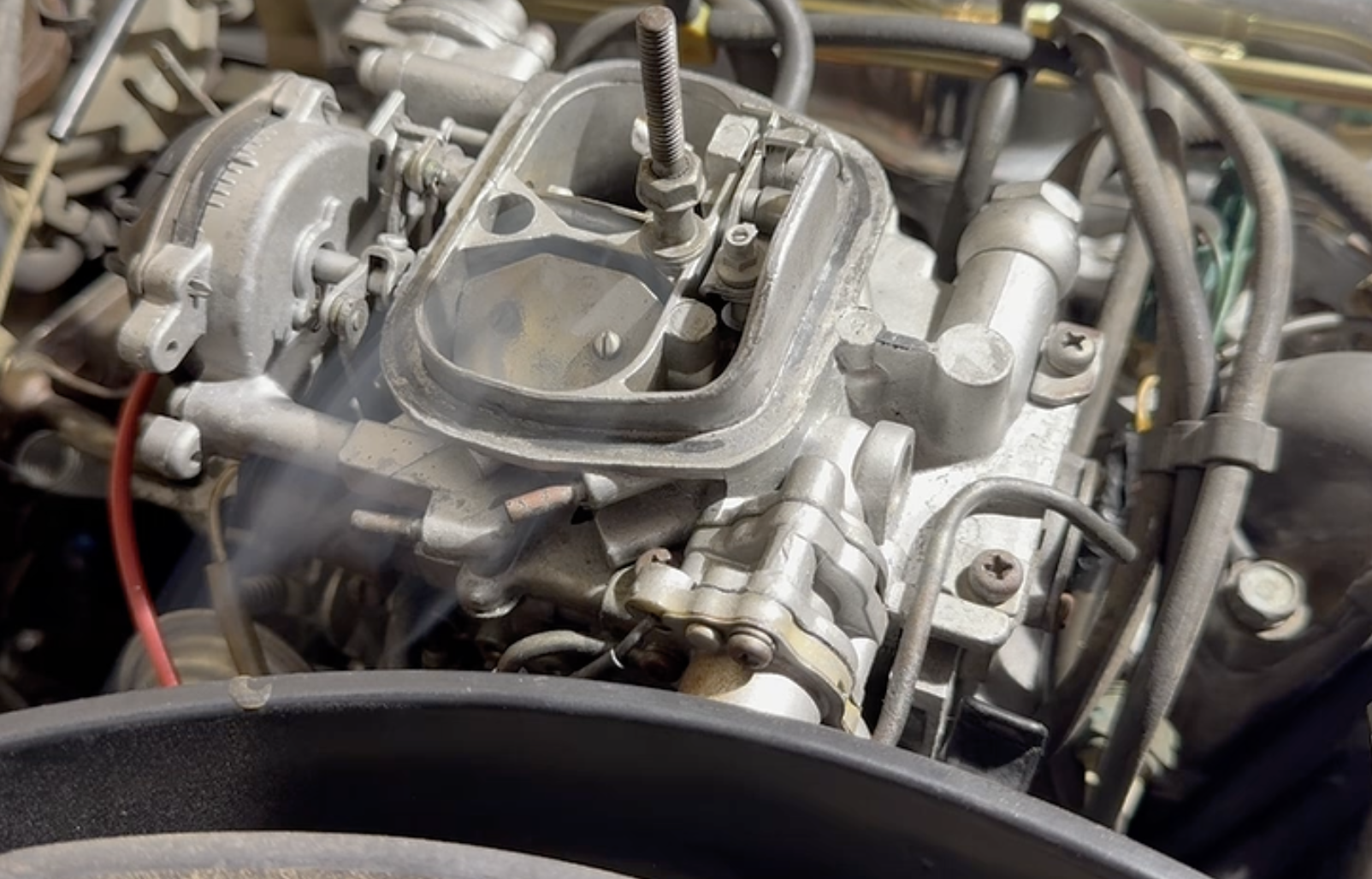
The most prevalent issue with my 1982 Toyota pickup since taking delivery was a persistent high idle, especially after the motor warmed up. While the symptoms were clear, the resolution was not. It is a behavior that can be caused by several conditions, so I needed to take a methodical, yet practical approach to troubleshooting. Spending years with IT data centers lets you hone your troubleshooting skills even with topics where you lack expertise. If nothing else, it was a good opportunity for me to become more familiar with the condition of motor and everything that was connected to it.
Focusing on Vacuum
A vacuum is at the heart of any naturally aspirated, carbureted motor. If the motor is able to suck in more air, it will suck in more fuel using a Venturi Effect, and increase the RPMs. Contrary to first instinct, combustion engines are an “air first, fuel later” machine. A gradually increasing idle speed as the motor warms is usually the result of a vacuum leak that is made worse as the motor warms up. But if that’s the case, where is the vacuum leak coming from? The first suspect were the vacuum lines, mainly because they are the easiest to diagnose, and tend to crack over time. Sometimes cracks are easy to spot, and other times they are not. A quick visual inspection showed that while all of my vacuum lines were pretty crusty, my bad eyes didn’t notice anything obvious.
I did have a fun realization as I began this effort. Complex vacuum systems on motors can often be thought of as a controlled way of inducing a vacuum leak to increase RPMs for specific needs. This is exactly the way they work when you turn on the air conditioner, or needed with a power steering load. It is a brilliant way to hijack a behavior of a motor to use it to address other needs.
Finding the leak
I decided to let some additional tooling help my efforts, so I picked up an ANCEL S3000-US Smoke Machine Automotive Leak Detector. There were more affordable options out there, but many I found simply applied too much pressure to a vacuum system. The last thing I wanted to do was to make things worse in order to save a few bucks on tooling.
To detect a leak while the motor was off, I pulled off the air cleaner assembly, and disconnected the vacuum line to the brake booster. I turned on the leak detector using a low pressure. I initially did not see any leaks from the hoses, but noticed the smoke coming from the secondary butterfly valve on the passenger side of the carburetor. Grok indicated that this could be a vacuum leak at the base of the carburetor, perhaps with the gaskets or the base plate. I certainly made a mental note of it.

While I didn’t see any noticeable leaks from the vacuum lines, they were all worth replacing. All of them were old and lost most of their pliability. Time to buy some silicone-based vacuum line in bulk and replace everything I could find, simply to eliminate a variable.
Oops
In my excitement of replacing all of the vacuum lines with nice new silicon tubing, I failed to realized that anything plastic that may be as old as the pickup might be a tad brittle. Well, the Bimetal Vacuum Switching Valve (BVSV) snapped all too easily when pulling the old lines off. I suppose I could have been mad, but I wasn’t. Since it is a temperature-sensitive switch that reads the coolant temperatures in order to regulate engine vacuum, it was probably a good time to replace it, and could conceivably be imparting some influence on my symptoms.

Time to order some parts and get this changed out.
– Pete